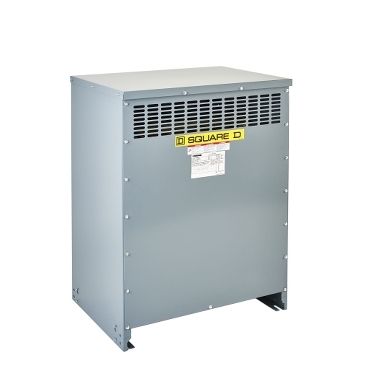
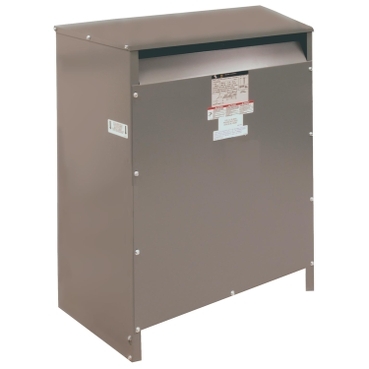
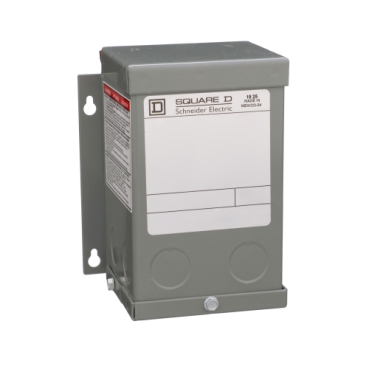
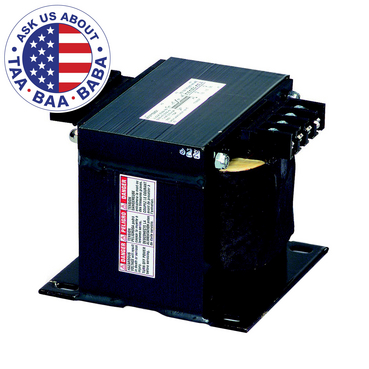
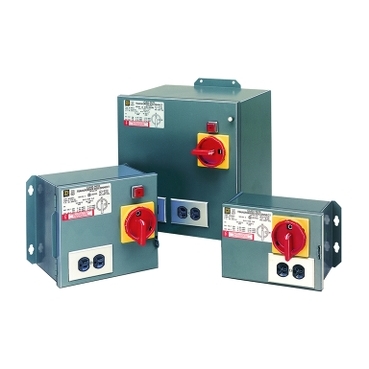
What do transformers do?

Types of transformers

Types of transformers

Electrical transformers come in all kinds of types depending on their primary function, construction, supply, etc. For example, a residential transformer isn’t going to require the same robust design as an industrial transformer. Here are some of the ways that transformers can differ from one another.

Design

The transformer design depends on how the primary and secondary windings are wound around the transformer’s core.

  • Core-type transformers have the windings wound around a magnetic core, much like we discussed in previous sections.
  • Shell-type transformers have the windings pass inside the steel magnetic circuit (or the core), which creates a shell around the windings.

Phase/supply

We have mostly referred to transformers that use two windings, but that is not the only way transformers work.

  • Single-phase transformers have one primary winding and one secondary winding, giving one main line of power. These are commonly used in residential transformers.
  • Three-phase transformers are more commonly used industrially since they have three sets of winding and can therefore generate three-phase power. Three lines of power tend to reduce the amps needed, use smaller wires, and provide more power.

Cooling

Transferring energy creates friction and resistance, which in turn creates heat. Heat can wear down the coils used to build transformers, so there are also cooling mechanisms in transformers to keep coils from overheating and wearing out faster.

  • Self-cooled oil-filled transformers are typically used for small transformers and leverage the surrounding airflow to stay cool.
  • Water-cooled oil-filled transformers use a heat exchanger to transfer the heat from the oil to the cooling water.
  • Air-cooled (air blast) transformers focus on cooling the generated heat by using fans that force the air circulation on the windings and core, not just the naturally surrounding airflow.

Purpose/voltage levels

Depending on whether you want to raise or lower the voltage, there are step-up and step-down transformers.

  • Step-up transformers are made to increase the voltage levels, so the transformer is a “step-up” transformer if the secondary winding has a higher number of turns than the primary side.
  • Step-down transformers are the opposite and decrease the voltage, so the primary winding needs to have more turns than the secondary side.

Install location/use

Not all transformers are suited for the same level of power or application, so there are multiple types of transformers that vary by use.

  • Power transformers are fairly standard and used to transmit electrical power at high ratings.
  • Distribution transformers tend to have lower ratings and are used to distribute electricity and convert voltage in transmission lines.
  • Measurement/instrument transformers convert voltage proportionately to measuring instruments, such as meters, network analyzers, and other devices.

How do transformers work?

There are three primary parts of a transformer:

  • the magnetic core,
  • the primary winding
  • the secondary winding

Two coils of wire (the secondary and primary windings) are wound around a magnetic core and are insulated from each other. The primary winding is connected to the input voltage source and the secondary winding is connected to the output load. These are the main components because a transformer must use the mutual induction between two circuits (or windings) that are linked by a common magnetic flux to transfer electricity from one point to another.

When an AC (alternating current) voltage is applied to the primary winding, an alternating magnetic field is created around the magnetic core. This magnetic field induces an AC voltage in the secondary winding, and that secondary voltage is calculated using a turn ratio. The ratio between the output voltage and the input voltage is the same as the ratio of the number of turns between the two windings.

Modern transformers that use AC supply will fluctuate in voltage according to the fluctuation of the current, meaning an increase in current will increase voltage. This is a critical function for industrial and residential applications since they allow us to distribute and regulate power across long distances and efficiently use different power systems by easily changing voltage levels.

So, what are transformers and how do they work? It may seem complicated at first, but just remember the basics of a transformer:

  • A transformer is a device that adjusts voltage up and down and transmits AC power.
  • They use electromagnetic induction to transfer AC from one circuit to another.
  • The core components of an elemental transformer are the primary winding, secondary winding, and magnetic core, though there can be more extensive transformer designs.
  • They come in different types and sizes for specific applications.

How do transformers work?

When are transformers used?

Transformers are used in all kinds of industries and environments. For example, a transformer is used to reduce the voltage of standard power circuits so that your household can run low-voltage devices like your small appliances or doorbell. On the other hand, transformers can also raise the voltage from generators to transmit electricity over huge distances or power industrial machines.

Here are some of the main functions and uses of transformers:

  • Transformers raise and lower voltage levels in the circuit of an AC
  • They increase or decrease the value of an inductor or capacitor in an AC circuit
  • Transformers do not allow DC input to flow through from one circuit to another since DC cannot generate a change in current
  • A transformer can isolate two circuits both physically and electronically

You will hear a lot about transformers when it comes to power generation, electric energy consumption, transmission and distribution, lighting, audio systems, and electronic equipment and machinery.

When are transformers used?

Finding the right transformers

Finding the right transformers

Transformers are essential components of the electrical industry and beyond, used in all sorts of fields and for all kinds of applications. Whether they power an industrial plant or your home, transformers make powering devices and machines at all levels possible.

Different types of transformers are made for specific applications, and their design and construction vary accordingly. However, even the same type of transformers aren’t going to be made the same or meet the same standards. You want high-quality industrial transformers for your business or organization to keep operations running smoothly, safely, and efficiently. Schneider Electric electrical transformers are built to last so that you can rely on your operations for years to come without purchasing expensive parts or replacements in the short term.

More to learn

  • Featured Offers & Solutions

Need help?

Need help?

Product Selector

Product Selector

Quickly and easily find the right products and accessories for your applications.

Get a Quote

Get a Quote

Start your sales inquiry online and an expert will connect with you.

Where to buy?

Where to buy?

Easily find the nearest Schneider Electric distributor in your location.

Help Center

Help Center

Find support resources for all your needs, in one place.

  • Help and Contact Center
  • Contact Sales
  • Find our Offices
  • Where to Buy
  • Tech Support: 877-342-5173
  • Careers
  • Company Profile
  • Investors
  • Newsroom
  • Report a Misconduct
  • Product Documentation
  • Software and Firmware
  • Product Selector
  • Product Replacement
  • DigestPLUS Online Catalog
  • Industries
  • Partners
  • Schneider Electric Community
  • Events
  • Privacy Policy
  • Cookie Notice
  • Terms of use
  • Change your cookie settings